
THE PRACTICE OF NOVALISM
Neurochange is a thirteen-week practice of deliberate reconstruction.
Neurochange is for people rebuilding after a crisis, moving through a significant transition, or functioning well inside a life that no longer feels entirely their own.
Through structured reflection, journaling, visual thinking and drawing, participants examine repeating patterns, recover access to what genuinely matters and practice turning clarity into deliberate action.
Every Sunday inside the Neurochange Membership.
WHEN SURVIVAL REMAINS IN CHARGE
The crisis may be over. Survival can continue making the decisions.
Survival is not the enemy. It develops courage, adaptability, resourcefulness and the ability to continue. But a strategy created for protection can remain active after circumstances change.
It may keep organizing life around fear, urgency, responsibility or the prevention of another loss.
Neurochange becomes relevant when:
- you have rebuilt your life, but realize that you rebuilt it around safety rather than what you genuinely want
- your life functions, but no longer feels entirely like your own
- you know what you want to change, yet unfamiliarity or resistance keeps returning you to the familiar
- the same personal, relational or professional patterns continue appearing in different forms
- too many goals, responsibilities and possible directions compete for your attention
- you understand the problem intellectually, but that understanding does not become a different choice or lived action
Neurochange creates a structured place to examine what still protects you, what now limits you and what can be transformed into material for the life you are deliberately reconstructing.
FROM SURVIVAL TO PARTICIPATION
The work moves from unconscious survival to conscious participation.
The thirteen-week Neurochange cycle develops through four cumulative movements. Each remains active inside the next.
I SEE
Awareness
Recognize what feels missing, what survival developed, which patterns repeat and why change can feel unsafe.
I CHOOSE
Agency
Recover inner authority and decide what is yours to choose, change and build.
I BECOME
Deliberate Reconstruction
Practice chosen qualities and integrate the past into the life being reconstructed.
I PARTICIPATE
Participation
Create order, move outward, meet uncertainty with trust and care for the life you have built.
This is paragraph text. Click it or hit the Manage Text button to change the font, color, size, format, and more. To set up site-wide paragraph and title styles, go to Site Theme.
Survival becomes material
Courage, adaptability, perseverance and resourcefulness are separated from the strategies that once carried them. The ability can remain even when the old strategy no longer belongs.
Patterns reveal a choice
Recurring situations become recognizable before they automatically produce the same response. A pattern begins to change when another response becomes available.
Resistance reveals what needs safety
Fear, hesitation and excuses are approached as information. Participants examine what feels unsafe and develop a workable relationship with unfamiliarity and change.
Insight enters ordinary life
What appears through reflection and drawing is carried into routines, decisions, relationships and the use of time. Understanding becomes part of how life is lived.
WHY DRAWING
The hand often discovers what the mind cannot yet explain.
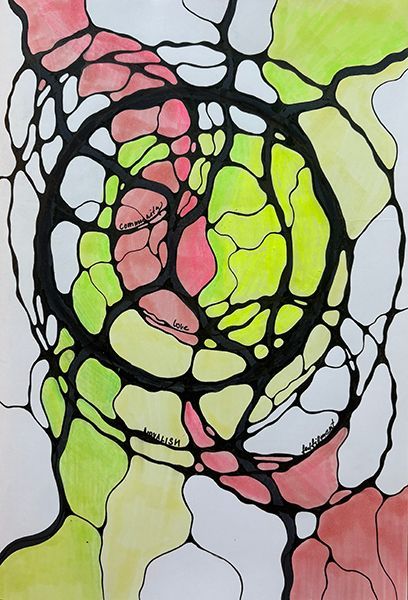
Neurochange uses drawing as a form of visual thinking, not as illustration and not as a test of artistic ability.
When a goal, obstacle, relationship, routine or possible future is placed into a visible composition, its size, distance, direction and relationship with other elements become available for reflection.
What existed as mental noise can be observed on the page.
As the drawing develops, forms may grow, harmonize, dissolve or change their relationship with the whole. The participant does not receive a prescribed interpretation. Meaning develops through their own associations, observations and reflections during the process.
Neurochange combines practices of Neurographica, created by Pavel Piskarev, with original drawings and reflective structures developed by Martina Huppertová.
HOW THE LIVE PRACTICE WORKS
Neurochange is practiced through a weekly rhythm, not consumed as information.
Each week gives one subject time to move from conscious attention through reflection and drawing into ordinary life. Across thirteen weeks, these subjects form one cumulative cycle. Each cycle introduces new ideas, and Neurochange continues to develop through the participation, questions and lived experience of its members.
MONDAY
Meet the topic
The week’s problem, core question and principle establish a clear direction for observation.
WEDNESDAY
Write and observe
A guided journaling exercise reveals how the subject already appears in decisions, relationships, habits and daily life.
FRIDAY
Deepen the work
A further reflection or practical exercise prepares the personal material that may enter the drawing.
SUNDAY
Draw live
Members draw together with Martina. The week’s subject is composed on paper, and explored through reflection during the drawing.
Neurochange cycles begin in January, May and September. Because Neurochange is practiced as a spiral rather than a prerequisite course, Membership may be entered at any point. Someone entering in the middle begins with the current subject and encounters the earlier movements when the cycle turns again.
After Week 13, the structured work rests for several weeks so that the changes can enter ordinary life. Sunday drawing continues through lighter, inspirational and exploratory practices.
CLEAR BOUNDARIES
Neurochange offers a structured practice, not prescribed answers.
Neurochange is an educational and reflective practice for adults who can engage safely in independent self-reflection. It is not psychotherapy, medical treatment, diagnosis, crisis support or a replacement for qualified professional care.
Martina guides the drawing process and the reflection around it. She does not assign fixed meanings to drawings or tell participants which decision is authentic. Each participant determines what their composition means and which choices they are prepared to make.
Drawing and reflection may bring difficult memories or emotions into awareness. Participants decide what they are ready to explore and remain responsible for seeking appropriate professional support when a subject requires clinical, medical or trauma-informed care.
JOIN THE LIVE PRACTICE
A reconstructed life is built through the choices you practice.
Inside the Neurochange Membership, one subject each week moves from observation and journaling into live drawing and ordinary life.
You may enter the current cycle at any point and continue through future cycles and integration pauses at your own rhythm.
Every Sunday inside the Neurochange Membership
