Everything Starts With a Notebook
NOVALISM IN PRACTICE
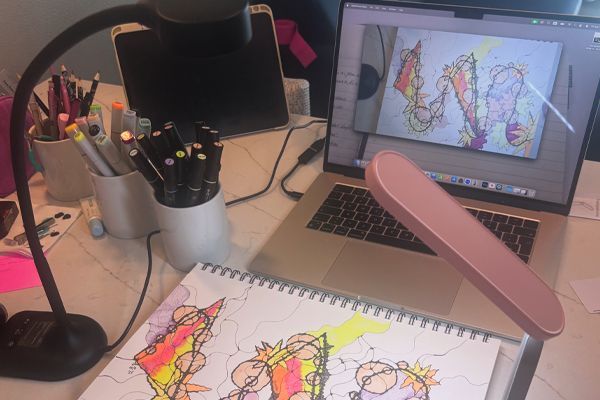
Every project starts with a notebook because an idea needs a physical place before it can become a clear direction. Handwriting gathers fragments, questions, images and decisions on pages that can be revisited. The notebook creates the conditions in which unfinished thought can develop, patterns can become visible and a project can begin to belong to the person making it.
· 6-minute read
An idea becomes real when it has somewhere to live
When I begin a project, I rarely begin with a polished plan. I begin with a notebook.
At first, the pages may hold only a phrase, a color, a question or a shape I cannot yet explain. One thought appears in the morning. Another arrives after a conversation. A third becomes visible while I draw. Each fragment may seem too small to matter on its own, but the notebook gives them a place to meet and begin to exist. The notebook is the first step of my project that actually exists.
I have used notebooks this way long before NOVALISM had a name. I spent my very first allowance on notebooks, and to this day I trust paper with my deepest thoughts. Notebooks are where I collect what has not yet become orderly enough for a document, presentation or finished plan. A notebook can hold uncertainty without demanding an immediate answer. It keeps an idea close while I learn what the idea is asking to become.
Every project starts with a notebook because the notebook marks the beginning of participation. The project is no longer only something I might do. I have made a place for it in my life.
I think with my hands
In NOVALISM, thinking is an embodied process. The hand thinks. The eyes think. Movement thinks. Language gives form to what is becoming visible, and reflection connects the parts.
I often understand something through my hands before I can explain it in words. Handwriting slows me enough to notice which sentence carries energy, which question returns and which idea looks important only because it is loud. A handwritten page preserves hesitation, emphasis, arrows, circles and changes of mind. These marks are part of the thought.
Typing is useful when information is ready to be organized. A notebook serves an earlier stage, when several forms of thought still need to share the same surface. A sentence can sit beside a sketch. A practical list can meet a memory. A question written weeks ago can suddenly explain a decision I am facing now.
The page allows the eye to travel. I can see what I crossed out, what I underlined and what keeps appearing in the margins. Thought leaves evidence, and that evidence becomes available for reflection.
A notebook creates the conditions in which ideas can emerge
An empty notebook does not contain a plan, yet it already changes the relationship with a project. It offers continuity.
Ideas often arrive in pieces. Without a place to collect them, every piece must compete for attention. We try to remember everything at once, and urgency begins to decide what receives our energy. A dedicated notebook removes that pressure. The thought can wait on the page until the next fragment arrives.
Over time, repetition becomes visible. The same concern may appear in several forms. One image may return without explanation. A goal may continue to receive words but no action. Another idea may quietly gather detail, clarity and momentum. The notebook shows the difference between a passing impulse and a direction that keeps asking for participation.
This is one reason handwriting deserves a place beside digital tools. The notebook preserves the development of thought rather than only its final version. It records the path by which a decision became possible.
Making the notebook changes the thinking
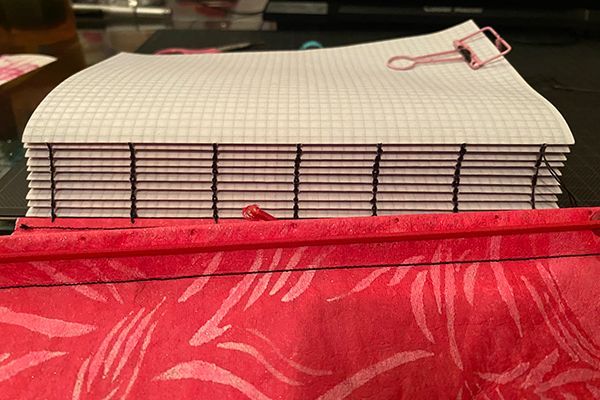
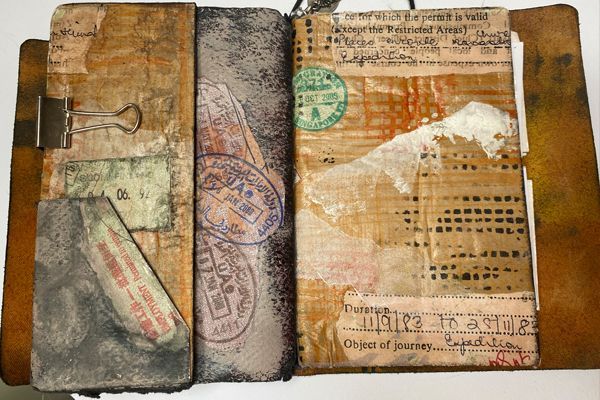
Sometimes the process begins even earlier. I make the notebook itself.
I choose the paper, fold the pages and sew them together. A shopping bag, a piece of packaging or another material from an earlier use can become a cover. The object begins with a previous life and takes on a new function.
Nothing essential is wasted.
This is deliberate reconstruction in physical form. Deliberate reconstruction is the central process of NOVALISM: deciding what still belongs, what must change and what form an authentic direction can take under present conditions. Making a notebook gives that principle a material expression. The old material remains visible, while its purpose changes.
The making also changes my attention. A notebook I have assembled for a particular project already contains intention before I write the first sentence. I know its weight, its texture and the effort required to create it. The project has entered the physical world through an act of care.
Perfection is unnecessary. A simple bound stack of pages can carry the same commitment. The value comes from giving the idea a form you can return to.
What belongs in a project notebook
A project notebook can contain anything that helps the thought develop:
- observations that feel important before you know why
- questions you are not ready to answer
- handwritten plans and changing priorities
- sketches, diagrams, symbols and visual associations
- quotations with their sources
- decisions and the reasons behind them
- evidence of what creates energy and what creates resistance
- notes about what has changed since the project began
The notebook can be untidy. Its role is to make thought visible, not to present a finished identity.
Order usually emerges after enough material exists. You may discover natural sections, repeated themes or a sequence of decisions. At that point, some parts can move into a digital system. The notebook remains the record of how the project learned its direction.
Begin with one notebook
Choose one project, question or area of life that currently feels crowded with possibilities. Give it its own notebook.
On the first page, write:
What am I trying to understand, choose or build?
Then let the early pages remain open and imperfect. Record fragments as they arrive. Add dates so you can see movement over time.
Once a week, read backward and mark:
- what keeps returning
- what has become clearer
- what has lost importance
- what now asks for action
End the review with one sentence:
What matters now is…
This sentence can change from week to week. The purpose is to create an honest relationship with the project as it develops.
The first object of a future life
A notebook is small enough to begin before the entire path is clear. It asks for no performance and no perfect answer. It asks for presence.
Everything starts with a notebook because the notebook lets an idea accumulate a history. The hand gives thought a physical form. The eye returns and recognizes patterns. Reflection turns those patterns into direction.
The notebook becomes the first object of the life or project you are choosing to build.
BEGIN WITH ONE HONEST QUESTION
The free Priority Honesty Practice helps you examine the relationship between your stated goals, your actual priorities and the way you currently use your time.
TRY THE PRIORITY HONESTY PRACTICE
Related reading
- Participation: Returning to Your Own Life
- Authentic Direction Under Real Conditions
Collected Experiences