The Opposite of Passive Consumption Is Participation
THE PHILOSOPHY OF NOVALISM
A CEO told a young employee that he could continue playing PlayStation or grow into a better position, but probably not both. The internet defended the employee’s private life. My own years inside computer games led me toward the less comfortable side of the argument.
· 8-minute read
A few days ago, I read a discussion on LinkedIn that stayed with me much longer than I expected.
A young employee had been given a choice by his CEO: stop playing PlayStation if you want to grow into a better position, or continue playing and accept that your career will probably stop where it is.
The comments were predictably outraged. People argued that an employer has no right to decide what someone does after work, and I understand the objection. Private life belongs to the employee.
Yet the CEO had not taken away the controller or forbidden the employee from playing. He had connected a private habit with a professional consequence and left the choice with him.
I know nothing about the employee’s performance, how many hours he played or what the CEO had observed before saying this. Still, I could not dismiss it as easily as most people in the comments did.
Instead, I kept wondering why almost nobody proposed the simplest experiment imaginable.
If gaming has no influence on your attention, motivation or ability to engage with life, putting the controller away for one month should be easy. You lose nothing by observing what happens.
I say this as someone who has spent almost twenty-five years watching the internet evolve and allowing it to change the way I think.
I had already performed the experiment without giving it a name
When I first discovered the internet around 2001, it was through AOL chat rooms. I spent entire nights talking to people from different countries. Looking back, I was certainly escaping reality to some extent, but the internet demanded something from me. If I wanted to remain in the conversation, I had to think, write, listen, respond, joke, disagree and build relationships.
My attention was active.
Then Facebook arrived and solved a real problem for me. I was living between several countries, and instead of calling everyone individually to announce where I was, I could write, “I just landed in Germany. Who has time to meet?”
The internet extended my life and helped me bring people into it.
Then came FarmVille.
Many of us started there. We planted virtual crops, waited for them to grow and returned to harvest them as if something terrible might happen if imaginary strawberries remained in an imaginary field for too long. It sounds absurd now, but millions of us understood the urgency perfectly.
Over the following years, I explored many virtual worlds. When my real life collapsed in 2018, those worlds became a refuge.
There is something comforting about a place where every problem has a solution, effort produces a predictable reward and the rules remain the same from one day to the next. Reality rarely offers such reliability. You can work hard and still lose. You can make the right decision and receive the wrong result. You can do everything possible and discover that some things were never under your control.
Inside a game, I knew what to do. Complete the task, collect the reward and begin the next one.
For a while, this helped me. Then it began taking more than it gave.
My awakening came around 2022, when I asked myself one question:
Among all the people I had met through gaming over the years, whose life did I actually want for myself?
The answer was no one’s.
I deleted every game, sold my gaming computer and returned to my real life. What surprised me afterward was how much of myself I had quietly surrendered.
I had become slower in conversations. Concentrating was difficult. I reacted more slowly to ordinary situations and observed less of what was happening around me. At the same time, I had become exceptionally good at clicking, waiting and collecting rewards.
Of course I had. Those were the abilities I had been practicing.
A few days were enough for the game to occupy my mind again
The LinkedIn discussion made me curious, so I downloaded one of my former favorite games to see what had changed.
It frightened me.
Years ago, games depended much more on people. We talked constantly, negotiated, planned, helped one another and solved problems together. Communication was part of the experience, and sometimes the relationships continued outside the game.
This time, the conversations were almost gone.
The game asked me to wait. If I did not want to wait, I could pay. When the timer ended, I pressed a button, collected a reward and started another timer. The obstacles that once required cooperation or thought had gradually been replaced by buttons, delays and payments.
After only a few days, I noticed what this simple rhythm was doing to my attention.
When I lay in bed, I no longer reflected on my day or thought about tomorrow. My mind returned to a place that did not exist. When I woke up, my first thought was no longer an idea or curiosity about the day ahead. I wondered whether something inside the game had finished building.
The game had occupied mental space that had previously belonged to my own life.
So I deleted it again.
This experience is why I find myself taking the CEO’s side, although perhaps not for the reason people assume. I have no interest in telling another adult how to spend an evening. I do believe that the way we repeatedly use our attention changes what remains available for everything else.
A person can choose to play. A CEO can also decide who appears ready for greater responsibility. Neither choice exists without consequences.
Perhaps the CEO saw an ability in the young employee that the employee was not yet using. Perhaps he recognized a habit that was consuming the attention needed to develop it. We do not know. The employee could reject his opinion, continue playing and build his career elsewhere.
Before rejecting the connection completely, however, I would want to test whether it was true.
Returning to real life required real participation
When I stopped playing the first time, I did not replace games with productivity systems. I found my way back whenever I chose something that required my participation.
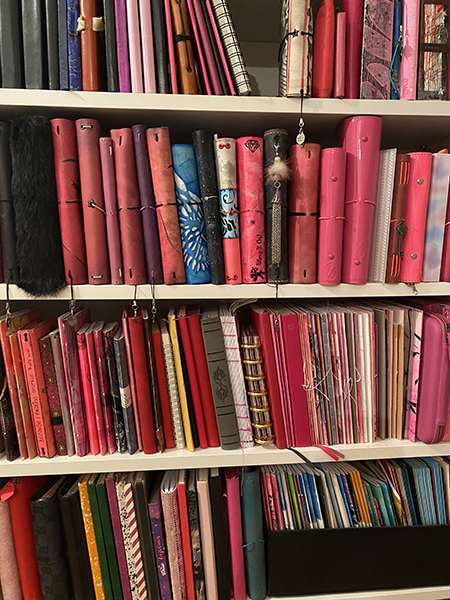
Cleaning a room made me look at my surroundings and decide what belonged where. Gardening demanded patience because nothing in nature grows faster when I press a button. Walking returned my attention to people, streets, weather and small changes I would otherwise miss. Making notebooks gave my hands a real material and left me with an object that continued to exist after I finished.
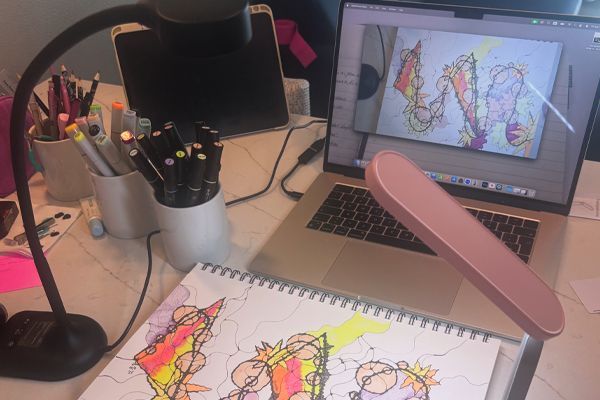
For me, Neurographica became the most effective tool for this purpose.
A drawing asks for my presence from beginning to end. I observe what appears, respond with my hand and make decisions that cannot be outsourced to an automatic reward system. The hand becomes part of the thinking process. Every line changes the surface and influences what I do next.
When I finish, the drawing exists in the same world I do.
My history with AOL chat rooms also prevents me from dividing life neatly into digital equals bad and physical equals good. A conversation through a screen can demand attention, humor, empathy and thought. A computer game can involve strategy, creativity and meaningful cooperation. An afternoon in the physical world can be spent avoiding everything that needs to be done.
The useful question is what an activity repeatedly asks from us and what abilities we are practicing while doing it.
Does it invite us to think, communicate, create and make decisions? Does it extend our relationship with life, as Facebook once did for me when I traveled? Or does it gradually reduce our role to waiting, clicking and collecting rewards designed by someone else?
The original LinkedIn discussion presented the choice as gaming or professional productivity. I think the distinction goes deeper.
Productivity can become another form of passive consumption when we chase tasks, numbers and achievements without deciding whether they belong to the life we want.
The real alternative is participation.
Participation means entering a relationship with what is happening around us. Something asks for our attention, and our response changes what happens next. A room becomes usable. A garden grows. A conversation develops. A notebook takes form. A drawing appears where an empty sheet had been.
These activities do not always feel as immediately rewarding as a game. Their results arrive unevenly, people behave unpredictably and real life refuses to provide a progress bar.
This uncertainty is also what makes our participation matter.
Try the experiment before deciding who was right
If you currently play computer games, stop completely for one month. Do not merely reduce the hours. Remove the game and give yourself enough distance to notice the space it occupied.
Observe what happens to your thoughts before sleep and immediately after waking. Notice whether ordinary tasks become easier or remain unbearably slow without constant rewards. Watch your concentration, your conversations and your patience. Pay attention to what you begin doing with the hours that return.
If you do not play games and are curious about their influence, try the opposite experiment. Download a simple game for one week and decide on the final day before you begin. Observe how quickly you start thinking about it when you are no longer playing. Notice what you postpone, how often you reach for the game and whether it changes the way you experience quieter parts of the day.
Do the experiment neither to prove the CEO right nor to defend gaming. Use it to observe yourself.
Perhaps you will discover that games bring genuine enjoyment and have no meaningful effect on the rest of your life. Perhaps you will see that they occupy more attention than the hours visible on the screen suggest.
Either result is more useful than another opinion.
Participation begins when we are willing to find out.
Compare what you notice
The free NOVALISM community is a place to examine your goals, habits and observations with other people who are actively working with their lives.
Try the experiment and bring us what you discover.
Collected Experiences